Genebase Bionet Builder
Advertisement

The Genebase Learning Center

Mar 27 2008

The mtDNA and its role in Ancestry: Part II (Facts about mtDNA)

Published by Genebaseteam at 12:32 am under mtDNA and its role in Ancestry

DNA Lesson Series: The mtDNA and its role in Ancestry
mtDNA Part I - mtDNA 101
mtDNA Part II - Facts about mtDNA  <<– you are here
mtDNA Part III - mtDNA Structure
mtDNA Part IV - Ancestral Markers
mtDNA Part V - Detecting Mutations in the mtDNA
mtDNA Part VI - mtDNA Ancestral Markers
mtDNA Part VII - The Cambridge Reference Sequence
mtDNA Part VIII - mtDNA Test Types
mtDNA Part IX - mtDNA Haplogroup Determination
mtDNA Part X - mtDNA Subclades
mtDNA Part XI - mtDNA Haplogroup H
mtDNA Part XII - Subclades of mtDNA Haplogroup H
mtDNA Part XIII - Distribution of Subclades of H
mtDNA Part XIV - Descendents of Maria-Theresa
mtDNA Part XV - Luke the Evangelist
mtDNA Part XVI - Empress Feodorovna
mtDNA Part XVII - James “Earthquake McGoon” McGovern

This blog is a continuation of mtDNA Part I.  Click here to view Part I.

In this blog, we will continue to give a little more background information about mtDNA.  A good understanding of the background of mtDNA will help you to better understand mtDNA ancestry discussions in further blogs in this series.

What does mtDNA look like?

1.  Its round!  Unlike all of the other DNA in our body which are linear, mtDNA happens to be a round circle, called a “plasmid”.

2.  It’s small!  While nuclear DNA (DNA found in the nucleus of the cell) is a staggering 49,530,000 to 247,200,000 bases in length, mtDNA is only 16,571 bases in length (don’t worry if you don’t know what a “base” is.  We will be talking about bases in detail in the next blog). 

Why is mtDNA so different from all of the other DNA in our body?

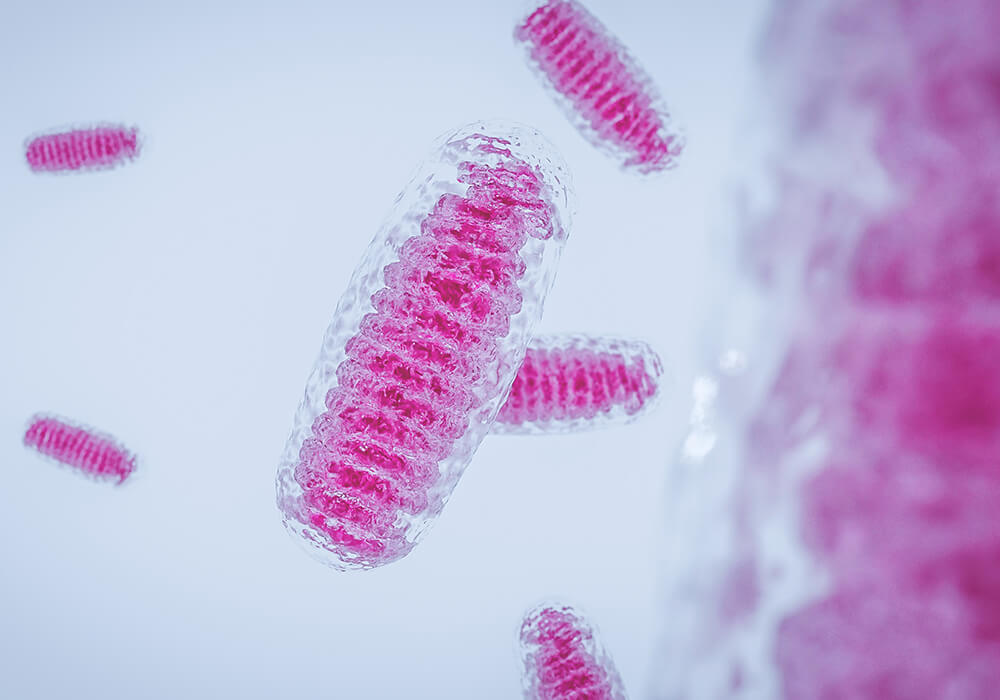
The strange appearance of the mtDNA in comparison to the other DNA in our body has something to do with its origins.  Mitochondria has many of the same features as single cell organisms called “prokaryotes”.  Bacterial cells are prokaryotes.  The mtDNA that is found inside the mitochondria is a circular plasmid, just like the DNA in bacteria, which is also circular.  The “endosymbiotic hypothesis” suggests that the reason for this close resemblence is that 1.7 to 2 billion years ago, mitochondria were originally bacteria that were “engulfed” by a cell and became permanently incorporated in the cytoplasm of the cell.  This is called a “symbiotic” relationship because the cell and the bacteria provided a survival advantage to each other (mitochondria produces energy “ATP” for the cell, and the cell provides protection).  This explains why the mtDNA is circular and found in the cytoplasm instead of the nucleus of the cell.

What does mtDNA do?  What’s its function?

The mtDNA contains the genetic code for 37 very important genes (13 of the genes are responsible for producing proteins, 22 of the genes hold the genetic code to produce transfer RNA (aka tRNA), and 2 genes hold the genetic code to produce ribosomal RNA (rRNA), all are necessary for our survival).  Thus, the mtDNA is very important, and when something goes wrong with the mtDNA, it can lead to mtDNA diseases such as exercise intolerance, Kearns-Syre syndrome and even death. 

The 1) size, 2) structure and 3) importance of mtDNA for survival, all play a role in where ancestral markers are located in the mtDNA and will allow you to understand the testing methods used to detect ancestral markers in the mtDNA. 

In Part III, we will discuss the different regions of the mtDNA

Navigate Home | Family Tree | Friends | DNA Ancestry | Photos | Journals | Groups | My Profile
More Info Tutorials | News | Learning Center | Resources | About Genebase | Store | Applications | Terms
Get Help Help Center
© 2003 − 2008 Genebase Systems. All Rights Reserved.
Powered by WP.